
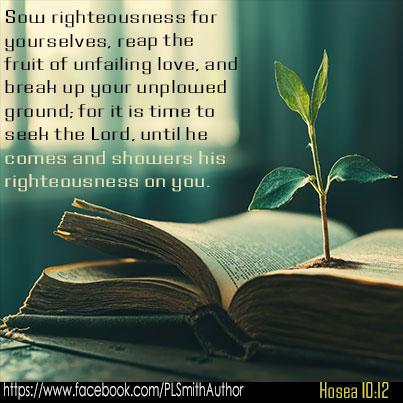
Hosea 10:12 Sow righteousness for yourselves, reap the fruit of unfailing love, and break up your unplowed ground; for it is time to seek the Lord, until he comes and showers his righteousness on you.
When you first read this verse from Hosea, you probably didn’t think “renewal” or “restoration” was related in any way. But Hosea 10:12 acts as an agricultural metaphor for spiritual renewal. Let’s look at the verse more in depth and see exactly how we can tie it in with our monthly theme of renewal.
If you don’t know the history of this book, it is written by the prophet Hosea who was speaking to the Northern Kingdom of Israel during a time of prosperity but deep spiritual decay. As they had done many times previously, Israel had once again strayed into sinful, empty practices involving idolatry, injustice, and self-reliance. Today’s verse served as both a warning of judgment and a hopeful invitation to return to their covenant with God
The verse is a call to repentance, a common theme for many of the prophets since the people were constantly straying and falling into sinful ways. In it Hosea urged Israel to stop cultivating sin, to soften their hardened hearts, and to once again pursue a restored relationship with God. He begged them to abandon their sinful ways and instead to seek His righteousness.
Hosea used agricultural metaphors, something the people would have understood immediately. He urged them to sow righteousness, to reap fruits of unfailing love, and to break up unplowed ground (this was referring to their hardened hearts). God would then bring restoration and renewal to them, showing His righteousness upon them.
One of the things that struck me was the use of the word “righteousness” twice in the verse. I wondered what the difference was between the righteousness they sowed and the righteousness that God would rain down upon them. So I did a deep dive to learn more.
The Hebrew word for righteousness is tzedakah which translates to righteousness, justice, equity, or fairness. In the context of biblical agriculture, it involves acting in complete alignment with God’s will and treating others with moral integrity.
And apparently the second use of righteousness is from the same root, but is slightly different. Here is what I found in an online search to learn more:
First “righteousness”: Lits-da-qah – This uses the noun tsedaqah (Strong’s #6666), meaning justice, virtue, or righteous actions. The prefix l means “according to” or “for.”
Second “righteousness”: Tse-dek – This is the base noun form tsedeq (Strong’s #6664), meaning rightness or justice.
That said, we can deduce that the prophet Hosea used this imagery to command Israel to plant seeds of right living. In return, God would shower down His own righteousness on them like refreshing rain, bringing about renewal and restoration.
What does that mean for us? It means that we need to do what Hosea urged. We need to seek to live our lives in ways that sow righteousness. We should strive to be holy and live in a way that is right before the Lord. And He will rain down His righteousness upon us when we do. If we seek Him earnestly and live our lives for Him, He will actively refresh our lives with His life-giving, sustaining grace and transform us into righteous servants.
Prayer: Lord, May my life be lived in a way that glorifies You. I want to be set apart and different. I want to sow righteousness. Rain Your renewing grace and goodness down upon me when I seek You earnestly. Amen


Be the first to comment